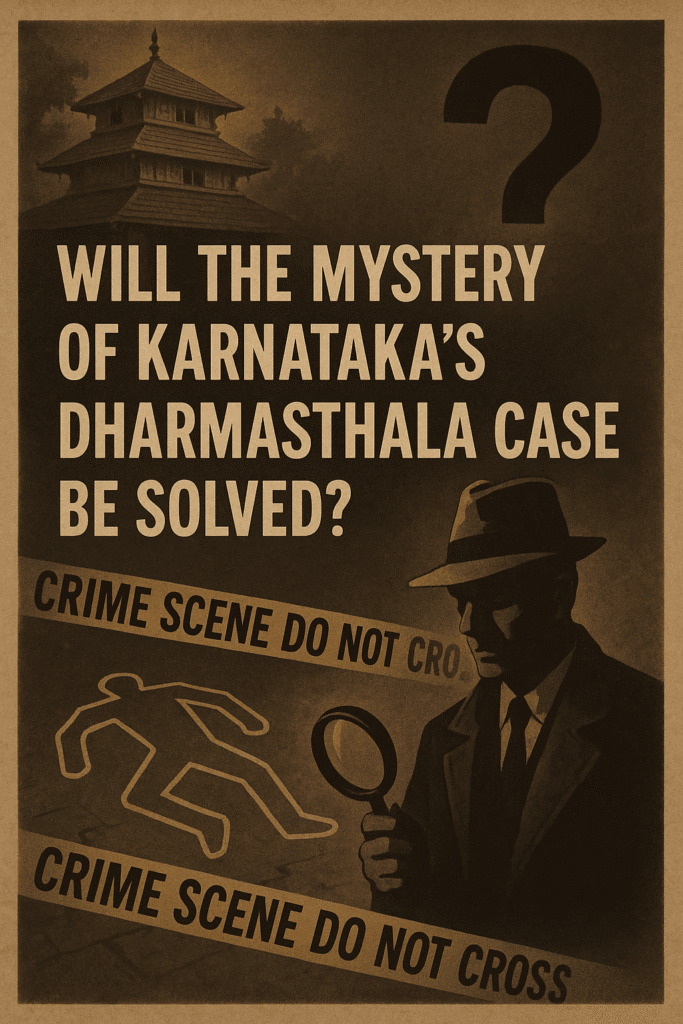
The Dharmasthala mass burial case is a serious and ongoing controversy that gained national attention in 2025, involving allegations of mass graves and human rights violations near the Dharmasthala temple town in Karnataka. A former sanitation worker has accused temple authorities of forcing him to bury hundreds of bodies, many of whom were women and children showing signs of sexual assault and violence, between the years 1995 and 2014. This whistleblower’s revelations have sparked massive public outrage and prompted intense investigations by the police and a Special Investigation Team (SIT).
Background and Emergence of the Case:
Dharmasthala, a well-known pilgrimage town in Karnataka, had a whistleblower—a former sanitation worker—who came forward in July 2025, reporting that he was coerced to bury over hundreds of bodies under threats to himself and his family. These alleged burials took place near the Netravathi River and several forested sites around the temple. The bodies included victims of murder, sexual violence, minors, and women, some showing marks of strangulation or acid attacks. The whistleblower claimed that between 1998 and 2014, he performed these burials under direction from influential people linked to the temple establishment. This disclosure also re-ignited memories of unresolved sexual violence cases in the region such as the 2012 Sowjanya rape-murder case.
Details of the Excavation and Recent Findings:
Following the whistleblower’s complaint, the Karnataka government promptly formed a Special Investigation Team led by top police officials to investigate the case thoroughly. The SIT began excavations in late July 2025 at 15 different locations identified by the whistleblower as burial sites. On July 31, skeletal remains including bones were discovered at the sixth excavation site about three feet underground, some bones were fractured, and they appeared to be from a male individual. Although not all planned locations yielded human remains, the bones recovered are currently undergoing forensic and DNA analysis to establish identity and cause of death.
Further excavation efforts are underway, involving forensic experts, police, revenue officials, and village-level authorities to ensure transparency. However, the investigation faces criticism from legal experts and human rights activists who call the probe insufficient and demand more expansive and transparent inquiry. Meanwhile, a court has issued injunctions restricting some media coverage, allegedly requested by associates of temple leadership, which has drawn accusations of influence and suppression.
Social and Political Reactions:
The mass burial allegations have created significant waves across Karnataka and beyond, stirring strong emotions among locals, devotees, activists, and political leaders. The BJP leadership has expressed mixed views, supporting the SIT probe but also alleging conspiracies against the temple administration. Human rights activists and lawyers demand justice for the victims and insist on a full, impartial investigation. The Dharmasthala temple authorities have publicly welcomed the SIT probe but have not admitted to any wrongdoing.
Families of missing persons, including that of Ananya Bhat (missing since 2003 during a college trip), hope these investigations may provide answers and closure. The case remains sensitive and complex, given the interplay of caste, religion, and political influences in the region.
Broader Context and Importance:
The allegations bring to light longstanding concerns regarding sexual violence, exploitation, and suppression of marginalized communities (particularly Dalits) in the Dharmasthala region. The temple town, a revered pilgrimage site, is now under scrutiny for possibly harboring dark secrets deeply buried both literally and figuratively. The investigation challenges not only the temple authorities but also raises questions about local governance and law enforcement mechanisms.
The findings from forensic examinations and legal proceedings will be critical in shaping the future course of justice in this case. Meanwhile, the SIT continues excavation and evidence collection with the aim to uncover the full truth behind these shocking allegations.
- Introduction:
- Contextualize Dharmasthala as a religious and cultural landmark
- Introduce the mass burial controversy and its emergence in 2025
- Whistleblower’s Allegations:
- Background of the complainant and his claims
- Details of forced burials and threats
- Impact on social conscience and public discourse
- Historical Background of Dharmasthala and Past Incidents:
- Past reports of violence and protests (including Sowjanya case)
- Social structure and caste dynamics in the region
- Investigation Process:
- Formation of SIT and key personnel
- Methods and locations of excavation
- Forensic findings and ongoing DNA analysis
- Challenges and criticisms faced by the investigating team
- Legal Proceedings and Court Orders:
- Injunctions and restraining orders affecting media coverage
- Rights of whistleblower and protection measures undertaken
- Role of judiciary in ensuring transparent investigation
- Social, Political, and Religious Implications:
- Reactions from political parties and temple authorities
- Public sentiment and activism
- Role of caste and religion in shaping narratives
- Significance and Broader Impact:
- What this case exposes about systemic issues in India
- Need for reforms and protection of marginalized communities
- Current Status and Future Outlook:
- Progress of the SIT excavation and pending forensic reports
- Expected legal proceedings and pressure for justice
- Role of media and civil society going forward
- Conclusion:
- Summary of key issues and the importance of justice
- Call for transparency, accountability, and human rights enforcement