Introduction
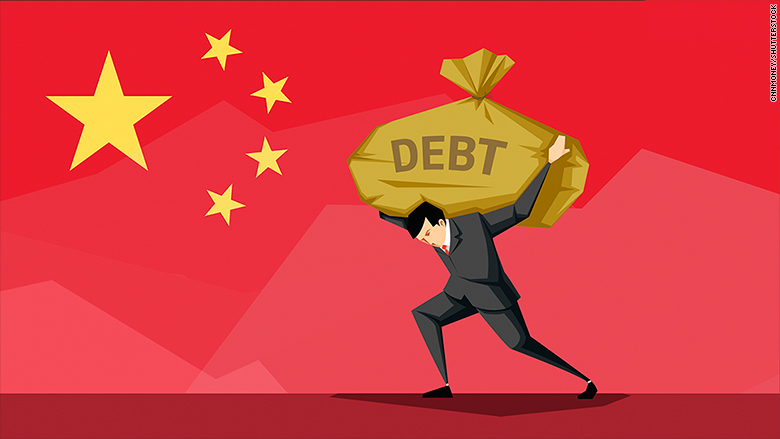
China, often hailed for its seemingly unstoppable infrastructure boom and rapid GDP growth, now finds itself on the brink of a massive debt crisis. Despite official figures placing China’s debt-to-GDP ratio below 100%, unofficial estimates suggest the real figure is closer to a staggering 300%—a reality fraught with risk for China’s economic stability and for the global economy.
This in-depth blog explains the true extent of China’s debt crisis: the origins, the reality behind the numbers, the ghost cities littering the country, and the lessons India and other developing nations must learn from China’s experience.
China’s Official vs. Real Debt Numbers
On paper, China’s official debt-to-GDP ratio is under 100%, appearing safer than major economies such as the US, Japan, and Greece. This would seem to support the view that China’s infrastructure boom and economic engine are running sustainably.
However, beyond these government statistics is a hidden layer of debt, much of it accumulated off-balance-sheet by local governments using creative financing techniques. Analysts and unofficial estimates put China’s real debt-to-GDP at nearly 300%, much higher than most people realize. That massive debt mountain amounts to more than $54 trillion, according to unofficial tallies by 2022, and it continues to balloon.
Infrastructure Boom and the Illusion of Growth
China’s extraordinary infrastructure feats are often showcased as evidence of economic prowess:
- The largest highspeed rail network in the world
- Skyscrapers built in less than three weeks
- Entire metro systems and underground cities constructed at breakneck speed
Yet, much of this construction has been aimed at meeting government-imposed GDP targets, not actual demand. This blind pursuit of growth for growth’s sake sowed the seeds of deep structural risks.
The Truth About Ghost Cities and Overbuilding
The scale of China’s ghost cities problem is immense:
- 50+ massive ghost cities now stand empty across China
- An estimated 65 million empty housing units, enough to house the entire population of France
- Local governments so cash-strapped they have started delaying salaries of their employees
Egregious examples include Ordos’ Kangbashi (built for 1 million, now <10% occupancy) and Yujiapu (billed as China’s Manhattan, but filled with empty office towers).
Why did this happen? The vicious cycle:
- Local officials were incentivized to approve more and more construction projects to boost short-term GDP
- Developers and households poured billions into real estate, believing property prices would rise forever
- Ghost cities and “bridges to nowhere” became common—concrete without purpose
How Did This Hidden Debt Emerge?
Local Government Financing Vehicles (LGFVs) are the lynchpin of China’s shadow public debt.
- Chinese law bans local governments from direct large-scale borrowing.
- Local governments instead set up LGFVs, technically independent companies that exist solely to borrow on the government’s behalf.
- These LGFVs use land as collateral to secure huge loans from state banks.
- Funds are used to build projects, driving up GDP numbers and fulfilling performance targets for local officials.
The problem: when the real estate market falters (as it did with the Evergrande crisis in 2021), revenues from land sales crash, leaving LGFVs with trillions in debt and no way to pay it back. As of late 2023, LGFV debt reached 60-66 trillion yuan (8–9 trillion USD)—almost 50% of China’s nominal GDP.
Systemic Risks: What Happens If the Debt Bomb Explodes?
If China’s debt bubble bursts, several domino effects could follow:
- Massive defaults at the local government level
- Job losses and a cascade of company failures in real estate and construction
- Whole provinces struggling to pay basic civil servant salaries
- A further slump in property prices, leaving Chinese households (who hold 70%+ of their wealth in property) deep in negative equity
- A domino effect on global commodity markets and supply chains
So far, Beijing has resorted to delaying the inevitable—rolling over debt via “debt swap programs” (consolidating short-term hidden debt into longer-term government bonds at lower interest rates). Regulatory directions have told banks to delay loan recovery and reduce interest rates. This strategy buys time but doesn’t solve the underlying problem.
Why Hasn’t China Collapsed Yet?
The central government’s control over the financial system, banks, and regulatory mechanisms allows it to paper over deep cracks—for now:
- The government consolidates LGFV debts into official bonds, reducing immediate pressure
- It directs banks not to press for immediate repayment
- These measures turn hidden, short-term debt into visible, longer-maturity debt
But this does not eliminate the underlying risks—especially as more payback obligations loom (~10 trillion yuan due in 2023–2024).
Key Lessons for India (and Other Developing Nations)
This crisis is not just a story about China, but a warning for fast-growing economies around the world:
- Growth Without Demand is a Mirage
- Building infrastructure without real market demand leads to waste, inefficiency, and overcapacity.
- Transparency Is a Shield
- Hidden debts are far more dangerous than recognized debts. Full financial transparency is a safeguard, not a luxury.
- Incentives Matter
- When short-term metrics (like GDP growth) are all that matters, bad incentives can drive disastrous decisions. Incentivize meaningful outcomes: job creation, productivity, and sustainability—not raw construction numbers.
The Road Ahead for China
China stands at a crossroads:
- Either it manages to deeply reform its local government finances and rein in overbuilding, pivoting to a more sustainable and consumer-driven growth model
- Or the debt burden could spiral, leading to more defaults, job losses, and a global economic shock
Beijing’s ability to control the slow-motion crisis has bought precious time, but true recovery will depend on difficult choices and major structural reforms.
China’s Debt Crisis: Case Study, Risks, and Key Lessons for India
Introduction
China, often hailed for its seemingly unstoppable infrastructure boom and rapid GDP growth, now finds itself on the brink of a massive debt crisis. Despite official figures placing China’s debt-to-GDP ratio below 100%, unofficial estimates suggest the real figure is closer to a staggering 300%—a reality fraught with risk for China’s economic stability and for the global economy.
This in-depth blog explains the true extent of China’s debt crisis: the origins, the reality behind the numbers, the ghost cities littering the country, and the lessons India and other developing nations must learn from China’s experience.
China’s Official vs. Real Debt Numbers
On paper, China’s official debt-to-GDP ratio is under 100%, appearing safer than major economies such as the US, Japan, and Greece. This would seem to support the view that China’s infrastructure boom and economic engine are running sustainably.
However, beyond these government statistics is a hidden layer of debt, much of it accumulated off-balance-sheet by local governments using creative financing techniques. Analysts and unofficial estimates put China’s real debt-to-GDP at nearly 300%, much higher than most people realize. That massive debt mountain amounts to more than $54 trillion, according to unofficial tallies by 2022, and it continues to balloon.
Infrastructure Boom and the Illusion of Growth
China’s extraordinary infrastructure feats are often showcased as evidence of economic prowess:
- The largest highspeed rail network in the world
- Skyscrapers built in less than three weeks
- Entire metro systems and underground cities constructed at breakneck speed
Yet, much of this construction has been aimed at meeting government-imposed GDP targets, not actual demand. This blind pursuit of growth for growth’s sake sowed the seeds of deep structural risks.
The Truth About Ghost Cities and Overbuilding
The scale of China’s ghost cities problem is immense:
- 50+ massive ghost cities now stand empty across China
- An estimated 65 million empty housing units, enough to house the entire population of France
- Local governments so cash-strapped they have started delaying salaries of their employees
Egregious examples include Ordos’ Kangbashi (built for 1 million, now <10% occupancy) and Yujiapu (billed as China’s Manhattan, but filled with empty office towers).
Why did this happen? The vicious cycle:
- Local officials were incentivized to approve more and more construction projects to boost short-term GDP
- Developers and households poured billions into real estate, believing property prices would rise forever
- Ghost cities and “bridges to nowhere” became common—concrete without purpose
How Did This Hidden Debt Emerge?
Local Government Financing Vehicles (LGFVs) are the lynchpin of China’s shadow public debt.
- Chinese law bans local governments from direct large-scale borrowing.
- Local governments instead set up LGFVs, technically independent companies that exist solely to borrow on the government’s behalf.
- These LGFVs use land as collateral to secure huge loans from state banks.
- Funds are used to build projects, driving up GDP numbers and fulfilling performance targets for local officials.
The problem: when the real estate market falters (as it did with the Evergrande crisis in 2021), revenues from land sales crash, leaving LGFVs with trillions in debt and no way to pay it back. As of late 2023, LGFV debt reached 60-66 trillion yuan (8–9 trillion USD)—almost 50% of China’s nominal GDP.
Systemic Risks: What Happens If the Debt Bomb Explodes?
If China’s debt bubble bursts, several domino effects could follow:
- Massive defaults at the local government level
- Job losses and a cascade of company failures in real estate and construction
- Whole provinces struggling to pay basic civil servant salaries
- A further slump in property prices, leaving Chinese households (who hold 70%+ of their wealth in property) deep in negative equity
- A domino effect on global commodity markets and supply chains
So far, Beijing has resorted to delaying the inevitable—rolling over debt via “debt swap programs” (consolidating short-term hidden debt into longer-term government bonds at lower interest rates). Regulatory directions have told banks to delay loan recovery and reduce interest rates. This strategy buys time but doesn’t solve the underlying problem.
Why Hasn’t China Collapsed Yet?
The central government’s control over the financial system, banks, and regulatory mechanisms allows it to paper over deep cracks—for now:
- The government consolidates LGFV debts into official bonds, reducing immediate pressure
- It directs banks not to press for immediate repayment
- These measures turn hidden, short-term debt into visible, longer-maturity debt
But this does not eliminate the underlying risks—especially as more payback obligations loom (~10 trillion yuan due in 2023–2024).
Key Lessons for India (and Other Developing Nations)
This crisis is not just a story about China, but a warning for fast-growing economies around the world:
- Growth Without Demand is a Mirage
- Building infrastructure without real market demand leads to waste, inefficiency, and overcapacity.
- Transparency Is a Shield
- Hidden debts are far more dangerous than recognized debts. Full financial transparency is a safeguard, not a luxury.
- Incentives Matter
- When short-term metrics (like GDP growth) are all that matters, bad incentives can drive disastrous decisions. Incentivize meaningful outcomes: job creation, productivity, and sustainability—not raw construction numbers.
The Road Ahead for China
China stands at a crossroads:
- Either it manages to deeply reform its local government finances and rein in overbuilding, pivoting to a more sustainable and consumer-driven growth model
- Or the debt burden could spiral, leading to more defaults, job losses, and a global economic shock
Beijing’s ability to control the slow-motion crisis has bought precious time, but true recovery will depend on difficult choices and major structural reforms.