Introduction
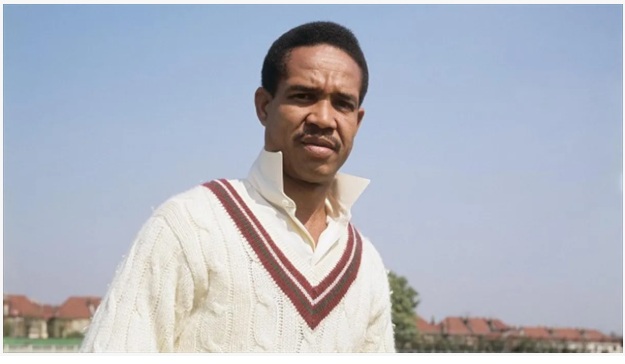
Cricket has witnessed many legends, but only a few have transcended eras to become eternal symbols of greatness. Among them stands Sir Garfield St. Aubrun Sobers, a cricketer whose name is synonymous with excellence, versatility, and dominance. From his debut in 1954 to his retirement in 1974, Sobers redefined the role of an all-rounder. His ability to excel as a batsman, bowler, and fielder made him a phenomenon in world cricket—a player every aspiring cricketer wished to emulate.
In an age where specialization was becoming prominent, Sobers shattered boundaries by being a complete package. Whether it was his elegant batting, strategic bowling, or electric fielding, Sobers could single-handedly change the course of a match. His contribution to West Indies cricket and the global game remains unparalleled.
Early Life and Background
Sir Garfield Sobers was born on July 28, 1936, in Bridgetown, Barbados, a Caribbean island that would later produce some of the finest cricketers in history. Sobers came from humble beginnings, raised in a family of modest means. Life was not easy for young Garfield—his father passed away during World War II, leaving the family in hardship. Despite these challenges, Sobers’ passion for cricket emerged early.
He played cricket in the streets with makeshift gear, often using sticks as bats and stones as balls. This raw environment honed his natural hand-eye coordination, reflexes, and inventive shot-making. Sobers’ talent was evident from his teenage years, and he quickly progressed through the ranks in local cricket.
By the age of 16, Sobers was already making waves in domestic competitions. His ability to bat and bowl multiple styles (pace and spin) made him a rare commodity even then.
Debut and Early International Career (1954)
Sobers made his Test debut for the West Indies against England at Kingston, Jamaica, in March 1954, at the age of just 17. Initially picked more for his left-arm spin, Sobers showcased glimpses of his all-round potential early on. However, his batting blossomed gradually. In his initial years, he batted lower down the order but steadily earned a reputation as a dependable player.
His breakthrough as a batsman came in 1958 against Pakistan, when Sobers scored an astonishing 365 not out in Kingston. This innings not only announced him as a world-class batsman but also broke the record for the highest individual score in Test cricket at that time. Remarkably, Sobers was just 21 years old when he achieved this milestone—a record that stood for nearly 36 years until Brian Lara surpassed it in 1994.
Batting Brilliance
Sir Garfield Sobers was the epitome of batting elegance and power combined. A natural left-hander, his technique was flawless, yet his stroke play was inventive and aggressive. Sobers could adapt to any situation—anchoring an innings when required or unleashing a flurry of boundaries to dominate bowlers.
Key Batting Statistics
- Tests: 93 matches, 8,032 runs, average 57.78
- Centuries: 26 (including his famous 365*)
- Highest Score: 365*
- First-Class Cricket: 28,314 runs with 86 centuries
Sobers was a master of all formats and conditions. He excelled on fast bouncy tracks, slow turning wickets, and everything in between. His ability to accelerate the scoring rate was ahead of his time—he played strokes that many associated with modern cricket.
Bowling Mastery
What made Sobers truly special was his versatility as a bowler. He wasn’t just a part-time option; he was a frontline bowler capable of winning matches with the ball.
Sobers could bowl:
- Left-arm fast-medium
- Left-arm orthodox spin
- Left-arm wrist spin (chinaman)
This three-pronged ability baffled batsmen, as Sobers could switch styles effortlessly based on the pitch and match situation. Over his career, he claimed:
- 235 Test wickets
- Best bowling figures of 6/73
This rare combination of skills made Sobers the most complete cricketer the game has ever seen.
Captaincy and Leadership
Sobers became captain of the West Indies in 1965, a period of transition for Caribbean cricket. Under his leadership, the team grew stronger and more competitive. Though his captaincy record was mixed, Sobers was admired for his tactical acumen, sportsmanship, and inspirational presence on the field.
One of his most memorable captaincy moments came during the famous 1968 Rest of the World vs England series, where Sobers’ innovative strategies and personal brilliance stood out.
Famous Achievements and Records
- Fastest Triple Century (365)* at the time
- First player to hit six sixes in an over in first-class cricket (1968 for Nottinghamshire, bowler: Malcolm Nash)
- Wisden Cricketer of the Year (1958)
- Knighted in 1975 for his contribution to cricket
Impact on Cricket and Legacy
Sir Garfield Sobers is widely regarded as the greatest all-rounder in cricket history. His influence on the game extends beyond numbers—he brought flair, entertainment, and a winning mentality to West Indies cricket.
Cricketers like Jacques Kallis, Ben Stokes, and Kapil Dev are often compared to Sobers, but even they acknowledge his unmatched versatility. Sobers made cricket exciting, inspiring generations to believe in the art of all-round performance.
Life After Retirement
After retiring in 1974, Sobers remained involved with cricket as a coach, mentor, and commentator. He coached international teams and nurtured young talent, ensuring his legacy continued beyond his playing days.
Sobers also played a significant role in promoting cricket globally. His stature in the game earned him respect worldwide, making him a true ambassador of the sport.
Why Garfield Sobers is the Greatest All-Rounder
- Elite batting and bowling combined at the highest level
- Adaptability to any match situation
- Innovation and dominance in multiple facets of the game
- Leadership qualities and charisma
- Records that stood for decades
Interesting Anecdotes
- Sobers once hit six sixes in an over, a feat that was almost unthinkable at the time.
- He was so versatile that some cricket experts believed he could have been selected purely as a batsman, bowler, or fielder.
Final Thoughts
Sir Garfield Sobers was more than a cricketer—he was an artist, a leader, and a game-changer. From humble beginnings in Barbados to cricket immortality, Sobers’ story is a testament to talent, hard work, and passion. Even decades after his retirement, Sobers remains the benchmark for all-round greatness.