Introduction
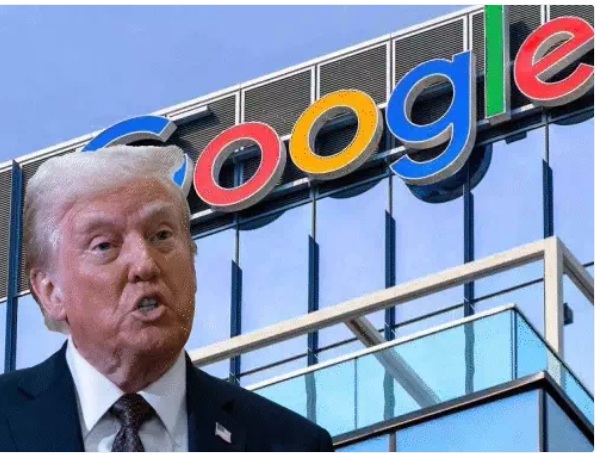
In July 2025, a crucial announcement from former U.S. President Donald Trump sent ripples across the global tech community and economies, especially affecting India. Speaking at a conference in Washington D.C., Trump openly directed leading American technology corporations—Google, Microsoft, Apple, and others—to stop hiring Indian engineers and to halt the expansion of their manufacturing footprint in China. His message stressed the priority of “American jobs for American citizens” as part of a broader “America First” economic policy.
This policy pronouncement has reignited debates on globalization, economic nationalism, and the dawn of a new “technology cold war.” While politically charged, Trump’s directive signals deeper shifts in global economic patterns, artificial intelligence (AI) development, and international labor dynamics. For India, a country deeply integrated into the global IT ecosystem, this presents both a challenge and a strategic opportunity.
Context: America’s Growing Tech Nationalism
The United States’ dominance in AI and high technology sectors has long been built on leveraging global talent and supply chains, with Indian software engineers playing a substantial role. Indian IT professionals have been essential in powering some of the world’s biggest tech firms through software development, cloud computing, AI research, and more.
By instructing tech giants to stop recruiting Indian engineers, Trump’s directive reflects a shift towards economic protectionism. The goal is to revitalize domestic employment by encouraging American companies to create jobs tailored for U.S. citizens and to develop homegrown AI technologies without reliance on foreign human capital.
This is an explicit move to counter China’s rise as a manufacturing powerhouse — particularly in electronics and AI hardware — by discouraging investment in Chinese factories and pushing for reshoring of supply chains within the U.S.
Implications for India
India’s IT sector contributes significantly to the national economy, earning major foreign exchange through outsourcing contracts and remote software services for multinational corporations. Trump’s directive threatens to disrupt this symbiosis:
- Reduced job opportunities for Indian engineers in the U.S. could slow down career growth and international exposure for these professionals.
- Loss of projects for Indian IT companies handling platforms and cloud solutions for American clients may lead to economic strain.
- Foreign exchange inflows to India linked to IT exports might decline, impacting broader economic stability.
- Increased competition in the global software development market as more countries react to U.S. policy shifts.
However, this scenario is not solely negative. India’s IT industry and policymakers can view this as a catalyst to:
- Accelerate indigenous AI R&D, technology startups, and innovation ecosystems within India.
- Build self-reliant digital infrastructure and reduce dependency on foreign tech services.
- Cultivate a global AI talent pool and attract international investments aimed at localizing production and research.
The New Technology Cold War
Trump’s call is more than a workforce policy; it reflects geopolitical tensions in the AI domain. The U.S. aims to build a competitive advantage by:
- Developing fully American-made AI technologies, integrating hardware and software without overseas dependencies.
- Ensuring national security and technological sovereignty by limiting foreign access to critical AI innovations.
- Minimizing reliance on China for manufacturing to reduce vulnerabilities in global supply chains.
India, traditionally a technology outsourcing hub, could become a strategic partner or competitor in this unfolding scenario, depending on how it positions itself globally in AI and technology development.
Global Economic and Political Repercussions
- The directive may stimulate trade tensions between the U.S., India, and China, affecting diplomatic relations.
- Companies like Google and Microsoft might need to restructure hiring practices and supply chains, increasing costs or slowing innovation.
- Other countries may recalibrate their own AI strategies and labor policies in response to the U.S.’s nationalism.
- On the flip side, governments worldwide including India might seize this juncture to prioritize digital sovereignty and invest heavily in emerging technologies like AI, quantum computing, and 5G.
India’s Road Ahead: Challenges and Opportunities
Despite uncertainty, India’s IT sector remains a powerhouse. To leverage the situation, India can focus on:
- Strengthening AI Education and Research: Boosting investment in AI-centric academic programs and research centers.
- Encouraging AI Startups: Creating funding policies, incubation programs, and ease of doing business to foster local AI innovation.
- Expanding Domestic Market: Building AI products catering to Indian and other emerging markets.
- Forming International Alliances: Collaborating with countries that share interests in AI development and talent exchange.
- Policy Reforms: Enhancing intellectual property rights, data security laws, and startup ecosystems to attract global tech investment.
Conclusion
Donald Trump’s directive to American tech giants to stop hiring Indian engineers and to cease expanding in China signals a pivotal shift in global technology and economic policies. While it poses immediate challenges for Indian IT professionals and firms, it also opens doors for India to accelerate its AI ambitions, strive for technological autonomy, and emerge as a leading hub for next-generation innovations.
The world stands at the cusp of a technology cold war, with artificial intelligence as a central battlefield. How India navigates this new era will define its role in the global digital economy for decades to come.