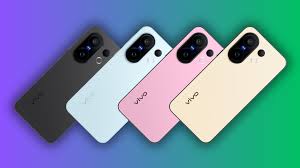
The smartphone market is a crowded place, especially in the competitive ₹45,000 – ₹50,000 segment. Vivo has thrown its hat into the ring with the new Vivo X200 FE, a device that aims to deliver a premium experience in a compact form factor. But how does it stack up against rivals like the Xiaomi 15, OnePlus 13s, and even its own siblings like the Vivo T4 Ultra and Vivo X200? Let’s dive into the details.
Pricing & Positioning: A Sweet Spot?
The Vivo X200 FE is strategically priced, aiming for a sweet spot in the market. It’s expected to retail around ₹50,000 offline, while online prices for the 256GB model could be around ₹46,000, and the 512GB variant at ₹51,000 through specific channels like “Sels Cafe”. This pricing suggests Vivo is targeting users looking for a compact yet capable device, potentially as a strong alternative to phones like the Oppo Find X8 .
Design & Display: Compact Comfort
One of the standout features of the X200 FE is its compact design. With a 6.31-inch OLED display, the reviewer praises it as the “perfect size for one-handed use” [. Despite housing a substantial 6500 mAh battery, the phone boasts excellent weight management and distribution [01:51], making it comfortable to hold.
The display itself is a 1.5K resolution OLED panel, offering good color tuning, deep blacks, and decent outdoor brightness. While it might not be the brightest on the market, it’s protected by Vivo’s “strongest glass yet,” Scot Sensation Core glass, promising durability.
Audio: A Mixed Bag
When it comes to audio, the Vivo X200 FE features stereo speakers that are loud and clear for dialogues. However, the music output leaves something to be desired, with poor instrument separation. This suggests that while it’s good for calls and casual video watching, audiophiles might find it lacking for music.
Performance & Haptics: Smooth Operator with a Gaming Caveat
Under the hood, the Vivo X200 FE is powered by the Dimensity 9300 Plus processor and runs on Android 15 with Funtouch OS 15. For everyday tasks and multitasking, the phone performs smoothly. A notable improvement is in the haptics, offering precise motor feedback for typing and app switching, a significant upgrade from the Vivo T4 Ultra.
While it handles games like BGMI with consistent FPS, demanding titles like Genshin Impact don’t run as smoothly as on Snapdragon 8 Gen 3-powered phones. For serious mobile gamers, the reviewer recommends considering the OnePlus 13s.
Camera Comparison with Xiaomi 15: A Detailed Look
The camera system is often a make-or-break feature for smartphones, and the Vivo X200 FE goes head-to-head with the Xiaomi 15 in this regard.
- Video Recording: Both phones deliver good 4K 30fps videos in daylight with decent exposure and highlight control. Autofocus and stabilization are acceptable but could be better for the price. In low light, the Vivo X200 FE shows more noise due to its smaller sensor compared to the Xiaomi 15.
- Low Light Images: Both maintain excellent highlight control and exposure. While details are sufficient, the Xiaomi 15 edges out the Vivo X200 FE with slightly better details and less noise due to its larger sensor.
- Daylight Images (Primary Sensor): The Xiaomi 15 tends to have a warmer, slightly yellowish tint, while the Vivo X200 FE produces cooler tones. Vivo’s greens can appear slightly oversaturated, but overall colors are pleasing, and both offer sufficient details .
- Ultrawide Lens: Both phones maintain consistent colors with their primary sensors. However, the Xiaomi 15’s ultrawide struggles with details, and the Vivo X200 FE’s 8MP ultrawide is even more pixelated , indicating this is a weak point for both.
- Telephoto Lens: Both capture sharp, detailed images with good contrast and highlight control. The Xiaomi offers 2.6x zoom, while the Vivo provides 3x zoom .
- Portrait Shots:
- The Vivo X200 FE uses an 85mm equivalent, making the subject appear broader, while the Xiaomi 15 uses 60mm .
- Vivo’s skin tones are more natural, whereas Xiaomi tends to make complexions fairer .
- Subject separation is excellent on both devices.
- Xiaomi’s background blur is generally more natural and consistent .
- In low light, the Xiaomi 15 excels with accurate color science and very natural background blur, while Vivo’s blur can be inconsistent.
- Selfies: The Vivo X200 FE features an upgraded 50MP front camera, a significant improvement over the Vivo X200. It offers better highlight control and face texture than the Xiaomi 15, which lacks autofocus and can produce slightly hazy images.
Conclusion & Recommendations: Is it the Right Choice for You?
The Vivo X200 FE emerges as a strong contender in its price segment . It’s recommended over the Vivo T4 Ultra due to its superior cameras and haptics. While it comes with UFS 3.1 storage, USB Type-C 2.0, and an optical fingerprint scanner, its primary and telephoto cameras are excellent, and the front camera is particularly impressive. The ultrawide lens, however, remains a weak point .
The phone’s strongest assets are its camera performance and impressive battery backup . If you’re considering stretching your budget for the Vivo X200, the reviewer suggests looking at the OnePlus 13 instead, especially if you frequently use the ultrawide lens and prefer a larger phone . The OnePlus 13 offers a better ultrawide, overall image quality, software experience, and haptics.
Ultimately, the Vivo X200 FE is considered one of the best options around ₹46,000 and is even preferred over the OnePlus 13s due to its better cameras. If you prioritize a compact design, excellent primary and telephoto cameras, and strong battery life, the Vivo X200 FE is definitely worth considering.