🔍 Introduction
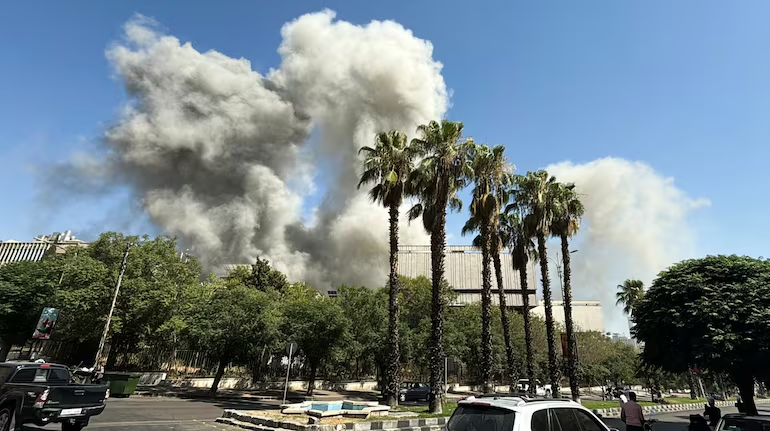
In recent months, a series of Israeli airstrikes have hit strategic locations across Syria—Damascus, Sweida, and Hama—prompting international attention and concern. This blog delves into the strategic, political, and humanitarian dimensions behind Israel’s continual targeting of Syrian territory.
1. Geopolitical Vacuum Post-Assad
Following President Bashar al‑Assad’s collapse and the rise of new factions—including the HTS‑led coalition—the Syrian military weakened significantly. Israel has exploited this power vacuum to attack weapon depots, airbases, command centers, and chemical‑weapons sites, aiming to disrupt any resurgence of threats along its northern border.
2. Preventing Advanced Weapon Transfers
Israel’s stated mission: stop advanced weapons (chemicals, rockets, surface‑to‑air missiles) from reaching extremist groups like HTS, radical militias, Iran’s forces, or Hezbollah. Targeted facilities include Hama airbase, T4 near Palmyra, and research labs around Damascus. This demonstrates Israel’s long-term tactic of preemption.
3. Protecting the Druze Minority
Escalating violence in Sweida, which killed nearly 250 Druze civilians during clashes between Druze militias, Bedouins, and government forces, prompted Israel to act. The Druze community—spanning Syria, Lebanon, and Israel—has deep ties; Israel framed its strikes as humanitarian protection, launching air raids on Syrian military HQs and Damascus’ defense ministry.
4. Buffer Zone Strategy in Golan Heights
The collapse of buffer‑zone neutrality—established in 1974—led Israel to seize abandoned Syrian positions in the Golan Heights. Over 400+ airstrikes since late 2024 reflect Israel’s aim to establish territorial depth, reduce threats, and prevent foreign militaries from gaining footholds near its border.
5. Message to Regional Powers
Israel’s actions signal both warning and deterrent messages—to Syria’s new Islamist-led governance, to Iran and Damascus’ ally groups like Hezbollah, and to Turkey. The strikes on military airbases serve as reminders to regional players: stay away or face consequences.
6. What Israel Claims: “Preemptive Defense”
Israeli Defense Minister Israel Katz: strikes aim to give “painful blows” in advance—”not a response to a current attack, but to prevent future ones”. Prime Minister Netanyahu’s remarks confirm Israel’s intent to neutralize strategic threats before they materialize in Syria.
7. International Pushback and Humanitarian Toll
- United Nations: Condemned Israel’s air campaigns and ground incursions as destabilizing Syria.
- Turkey: Warned Israel to uphold Syria’s sovereignty and avoid sabotaging peace efforts.
- Civilian impact: In Sweida and Damascus, civilian casualties and displacement raise serious humanitarian concerns. UN continues to demand restraint and respect for sovereignty.
🕰️ Timeline Overview
| Date | Event |
|---|---|
| Dec 2024 | Assad’s fall triggers initial wave of Israeli strikes in Syria |
| Apr 2025 | Large-scale bombings of Hama, T4, and Damascus airbases |
| Jul 15–16, 2025 | Israeli strikes following mass killing of Druze in Sweida (≈250 dead) |
📌 Final Analysis
Israel’s campaign is multi-layered:
- Security-driven: preemptive strikes to safeguard national security and borders.
- Ethno-religious calculus: protecting Druze minority kin under threat.
- Geopolitical leverage: asserting dominance in buffer zones, sending strong signals to rivals.
But this strategy raises crucial questions: - Is Syria sliding into further fragmentation?
- What about potential escalation against regional powers or unintended civilian harm?
- Could these strikes undermine longer-term diplomatic efforts?
✅ Conclusion
Israel insists its airstrikes in Syria are defensive, aiming to preempt threats and protect allies. However, these actions deepen complexity in a volatile region still unraveling from a decade-long civil war. The balancing act between security calculus, humanitarian obligations, and international law frames today’s Middle East tension.