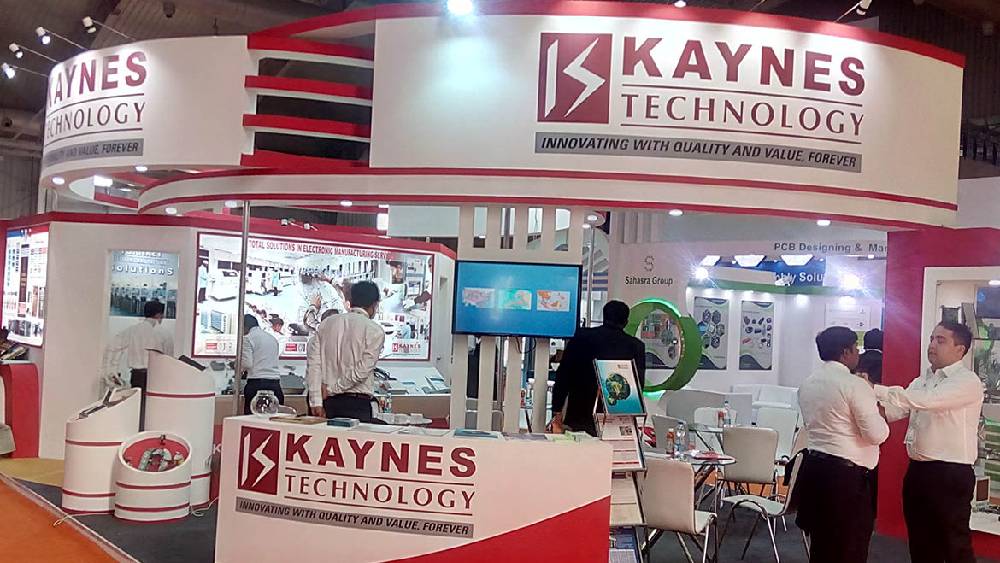
Welcome to this detailed fundamental review of Kaynes Technologies, following their Q1 FY26 quarterly results release. The company’s latest financial performance and strategic developments have attracted significant market attention, reflected in a sharp stock price increase immediately after the results announcement. This analysis breaks down their key performance indicators, revenue mix, margin trends, order book status, segmental outlook, capital expenditure, and management guidance, offering insights into what drives Kaynes Technologies’ growth prospects and valuations.
1. Consolidated Financial Performance: Topline and Profitability
For Q1 FY26, Kaynes Technologies reported a strong revenue growth of 34% year-on-year. Despite the company’s earlier guidance of targeting a 60% revenue growth for the full year, the first quarter is traditionally a slower start for the financial year, and the management expects performance and revenue to pick up progressively in the coming quarters (Q2, Q3, Q4). The 34% growth lays a solid foundation for achieving their ambitious annual target.
Earnings before interest, taxes, depreciation, and amortization (EBITDA) increased impressively by 69%, indicating substantial operational leverage and improved profitability. This jump in EBITDA is accompanied by margin expansion which is a significant highlight. The EBITDA margin for the quarter stood at approximately 16.8% to 17%, notably higher than the company’s historical guidance margin range of 15-15.5%. The improvement was driven by the growing share of the high-margin Original Design Manufacturing (ODM) segment in revenue, which saw an increase from roughly 2% to 10%-20% share in Q1 FY25. Gross margins across all verticals showed improvement, ranging between 50 to 200 basis points, contributing positively to EBITDA and overall margins.
Net profit increased robustly by 47%, with net profit margins improving by 100 basis points to 11.1%. This reflects the company’s focus on profitability improvement along with revenue growth.
2. Order Book and Growth Outlook
A key highlight is Kaynes Technologies’ robust order book. As of Q1 FY26, the closing order book stood at approximately ₹7,400 crore, marking a 47% growth compared to the same period in the previous year. This strong order visibility underpins confidence in sustained revenue growth over the medium term.
3. Revenue Mix and Segmental Performance
Kaynes Technologies operates across six major verticals: Automotive, Industrial, Aerospace, Medical, Railways, and IoT. The analysis of segmental revenue shows some shifts and growth trends:
- Industrial segment revenue share increased slightly.
- The ODM segment, which is a high-margin business within electronics manufacturing services (EMS), significantly increased its share to 10-20% from just 2%. This reflects a strategic shift towards higher-margin design and manufacturing services.
- The Automotive, Industrial, and Electric Vehicle (EV) segments dominated the revenue mix in Q1.
- Aerospace and Railways are poised for increased revenue contribution in the upcoming quarters, with aerospace expected to contribute around 8% of sales and railways about 10-12% of sales as per management projections.
4. Working Capital and Capital Expenditure
Receivables days increased notably due to the acquisition of a smart metering business, which brought in higher receivables. The company acknowledged this and plans to renegotiate contracts to reduce receivables days going forward, targeting around 70 working capital days by the fiscal year-end, excluding this acquisition-related exception. Including the acquisition impact, the company still targets under 100 days of working capital for FY26, which is reasonable for a growing EMS business.
On the asset side, asset turns declined due to heavy capital expenditure underway for expansion in PCB assemblies, High-Density PCB Interconnect (HDPI) assemblies, and especially for their Semiconductor Assembly and Test (OSAT) facility, which is expected to be ready by Q4 FY26. This expansion is expected to drive future revenue growth once the new capacities become fully operational.
Debt also increased quarter-on-quarter, aligned with the ongoing CapEx investments. However, management remains confident these strategic investments will enhance capacity and earnings potential.
5. Management Guidance and Future Outlook
Management reaffirmed its guidance of achieving a ₹4,500 crore revenue target for FY26, which implies a 60% revenue growth for the year. Despite Q1 growth being below this target, the company expects strong sequential growth in Q2, Q3, and Q4.
EBITDA margins are expected to sustain around the 17% level recorded in Q1, supported by margin expansion in design and manufacturing segments as well as operational efficiencies.
The Semiconductor Assembly and Test (OSAT) facility scheduled to be operational by Q4 FY26 is a game changer. It will add a new dimension to the company’s service offering with high-margin opportunities and client addition from multiple countries.
Order intake remains healthy, especially from aerospace and electric vehicle segments, which are key growth drivers going forward. Railways are also expected to pick up, diversifying revenue sources.
6. Valuation and Market Performance
Kaynes Technologies trades at a high price-to-earnings (P/E) multiple, approximately 131 times trailing earnings, reflecting high growth expectations. The one-year stock return has been approximately 40%. The market capitalization stands around ₹41,000 crore, with a share price near ₹6,200 as of July 31, 2025. The median P/E since IPO is about 118 times, indicating that current valuations are within an expected range for a rapidly growing company in the EMS sector.
7. Strategic Highlights and Growth Catalysts
- Increasing share of high-margin ODM business.
- Robust order book expansion across automotive, aerospace, EV, and industrial segments.
- Expansion of OSAT semiconductor assembly and test capabilities to capitalize on semiconductor industry growth.
- Realignment of working capital to optimize cash flows post acquisition.
- Capex investments ongoing to scale PCB assembly and HDPI operations.
Segmental diversification with growing contributions from aerospace and railways.