Introduction
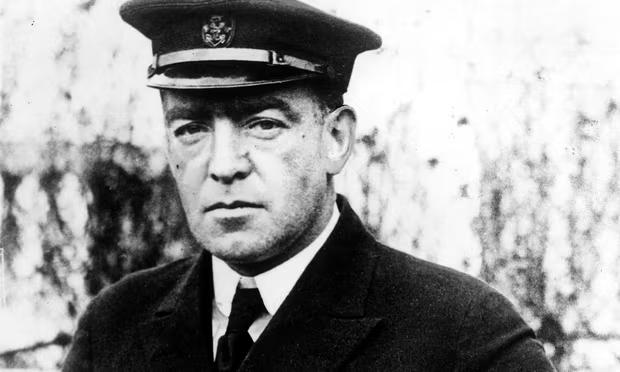
History is filled with stories of adventure, courage, and survival, but few are as utterly astounding as the saga of Sir Ernest Shackleton and his 28-man crew trapped in Antarctica for more than 500 days. In an age devoid of modern technology—no smartphones, no GPS, no satellite communications—these explorers set out to accomplish the impossible: traverse the entire Antarctic continent on foot. What unfolded was not just a test of endurance, but an epic demonstration of leadership, resilience, and the limits of human spirit.
This in-depth narrative follows their journey from its ambitious beginnings, through months of unimaginable hardship, to the miraculous rescue that stunned the world.
The Ambitious Dream: Crossing Antarctica on Foot
On November 4, 1914, the Endurance set sail from Britain, commanded by Sir Ernest Shackleton, a renowned explorer known for his audacity and vision. Shackleton’s objective was revolutionary: to be the first to cross the entire Antarctic continent by foot—a feat no person had even dared to attempt due to the continent’s deadly climate and treacherous terrain.
Their planned trek was grueling: approximately 2900 kilometers, traversing from the Weddell Sea on one side of Antarctica to the Ross Sea on the other, passing through the South Pole itself. If all went smoothly, this journey, under the harshest conditions on Earth where temperatures plummet to -50°C and blizzards are a constant threat, would take about 120 days.
But fate had other plans.
Into the Ice: The Endurance Gets Trapped
After a final stop at the whaling station on South Georgia Island—humanity’s last outpost before the great southern wilderness—the party pressed into the Weddell Sea on December 5, 1914. Almost immediately, they encountered conditions far worse than expected. The Weddell Sea is notorious for its perennial, tightly packed sea ice, making navigation perilous.
On January 18, 1915, disaster struck: the Endurance became locked fast in ice, unable to move. Attempts to break free—using the ship’s engine at full power, even sending men onto the ice with axes and chisels—were futile.
With the Antarctic winter fast approaching, Shackleton ordered his men to brace themselves for months trapped aboard. For weeks and then months, the ship remained immobilized as the ice thickened and darkness claimed the land for 24 hours a day.
Collapse and Abandonment: When the Endurance Was Lost
By September 1915, cracks were appearing in the hull—harbingers of trouble as the ice’s relentless pressure wrenched at the ship’s structure. On October 24, disaster: the ice split, a massive chunk smashed the ship’s stern, and water began to flood the inside. The men fought back with pumps for three days, but it was no use—the Endurance was doomed.
On October 27, after more than nine months imprisoned in ice, Shackleton gave the grim order to abandon ship. Men grabbed only essential items—most no more than 2 pounds in weight per person. Shackleton himself left behind his gold coins and Bible as a mark of resolve, reinforcing to all that survival came only from leaving sentiment behind.
Nine months into their ordeal, the men found themselves camped on a shifting floe of ice, hundreds of kilometers from land, with scant supplies and no means to contact the outside world.
Surviving on the Ice: Life Lessons in Leadership and Hope
The camp on the ice floe—dubbed “Ocean Camp”—was the first of several. Rations were perilously low: about one month’s food, three small lifeboats, and the clothes on their backs. To cope with the biting cold, men slept pressed together, sometimes directly atop bare ice. As days passed, they were forced to kill their sled dogs’ puppies for meat, a grim necessity.
Shackleton knew that leadership was as much about morale as logistics. He meticulously assigned duties to every member, ensuring everyone had a role, a routine, and purpose. He imposed strict food rationing, sometimes lying about food stocks to keep hopes alive. The group also occasionally hunted seals and penguins for additional sustenance.
With the approach of summer and melting ice, travel became more difficult: the surface softened, making it exhausting to pull the heavy boats. After exhaustive efforts yielded little progress—just 1 mile after three hours—they reverted to waiting for the ice to drift closer to land.
Drifting Towards Despair: A Floating Prison
As months drifted into 1916, the ice floe inexorably carried the men away from land, rather than towards it. Attempts to reach the nearest islands—Paulet Island and later Clarence and King George Islands—were repeatedly stymied by impassable waters and shifting floes.
Food and fresh water became ever scarcer. For drinking, men melted small amounts of ice by keeping tins close to their bodies. Hunger grew so desperate that decayed meat, originally set aside for dogs, was eaten by the crew. Lips cracked, throats burned, and exhaustion mounted. Amazingly, no one succumbed to cannibalism—a testament to their discipline and grim ingenuity to find alternative food sources, including a fortunate kill of a leopard seal that provided a thousand pounds of meat.
After 497 days of drifting, on April 15, 1916, a miracle: the three boats made landfall on bleak, uninhabited Elephant Island. For the first time in 18 months, the men stood on solid ground. Morale soared, but the danger was far from over.
The Impossible Choice: A Mission for Rescue
Elephant Island brought hope but no guaranteed rescue. The island was desolate, unvisited by any ship, with no supplies and no way to signal for help. Shackleton urgently needed to seek rescue or all would perish.
He faced three options:
- Sail 800 km northwest to Cape Horn
- Sail 880 km east to the Falkland Islands
- Or attempt the 1300 km voyage to South Georgia Island
Cape Horn and the Falklands were closer, but the routes meant crossing the infamous Drake Passage, one of the world’s deadliest seas.
Shackleton chose South Georgia, banking on the prevailing winds and currents, and believing a whaling outpost there meant the best chance for help. He selected five of his strongest men, left the rest to survive on Elephant Island, and set off in a small lifeboat—into the teeth of the world’s roughest seas.
Through Hell and High Water: The Lifeboat Voyage
On April 24, 1916, the party launched the now-legendary James Caird. Their voyage was a masterpiece of navigation and raw endurance. Battling monstrous waves, freezing spray, and storms in near total darkness, they alternated rowing and bailing out seawater, stopping only to rest in snatches.
The sun’s rare appearances were crucial: using a sextant, navigator Frank Worsley fixed their position and kept them on course. The boat nearly capsized several times; their only shelter was packing together for warmth on the sodden deck, often eating lying down because no one could sit up straight in the chaos.
After 16 days and unimaginable suffering, they sighted South Georgia—but another storm nearly crushed their hopes. With their last reserves of strength and willpower, they finally landed on the “wrong” side of the island, far from the human settlement.
The First Crossing of South Georgia: Mountains, Glaciers, and Hope
The ordeal was not yet over. Getting help meant crossing South Georgia—over 29 miles of unmapped, mountainous interior, covered in glaciers and treacherous crevasses. No one had ever crossed it before.
Resting for nine days to regain some strength thanks to abundant wildlife, Shackleton, Worsley, and Tom Crean set out at 3 AM on May 19, 1916. With no trail, little equipment, and only their determination, they climbed and circled seemingly endless peaks and valleys, at times lowering themselves down cliffs with ropes, cutting footholds into the ice itself.
After 36 sleepless hours, they staggered into the whaling station at Stromness, unrecognizable, their faces blackened, beards wild, clothes tattered. Their reappearance shocked the workers—these were men believed lost forever.
The Rescue: A Miracle Fulfilled
But the ultimate test still awaited: rescuing the rest of the crew stranded on Elephant Island. The first three rescue attempts failed—ships became trapped in ice or were forced back by weather. Time passed, hope waned, and Shackleton, desperate, pleaded with governments for help.
At last, with a borrowed Chilean steamship, he succeeded: on August 30, 1916, 497 days since their ordeal began, all 28 men of the Endurance expedition were rescued alive.
Lessons in Leadership, Resilience, and the Human Spirit
The Endurance expedition has become a case study in extreme leadership. Shackleton’s ability to maintain morale, delegate responsibility, manage meager resources, and inspire his men to survive against all odds is legendary.
His story is filled with critical insights:
- Perseverance in the face of repeated failure
- The power and necessity of hope
- Flexibility when plans collapse
- The will to set aside sentiment, even precious possessions, for survival
- The primacy of mental strength in overcoming challenges
Shackleton’s name lives on, not just for what he accomplished, but for how he led and what his journey teaches humanity about survival and the extraordinary depths of courage.
Epilogue: The Enduring Legacy
To this day, Shackleton’s crossing of South Georgia has been repeated only by expert climbers with modern gear—years later, highlighting the magnitude of his achievement. The 150 photographic negatives saved by expedition photographer Frank Hurley provide haunting, iconic images, offering proof and perspective on this unthinkable odyssey.
The story of Endurance is as relevant as ever: a celebration of what is possible when people refuse to surrender, no matter how bleak the odds. It continues to inspire leaders, adventurers, psychologists, and ordinary people facing their own “Antarctica”—the seemingly insurmountable challenges of personal and professional life.