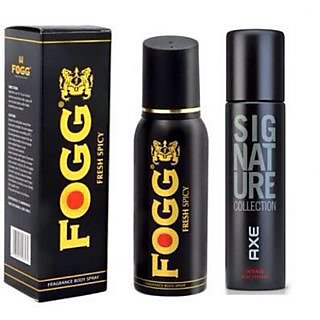
We meticulously outline the rise of Fogg in the Indian deodorant market, detailing how it strategically dethroned the then-dominant brand, Axe, by identifying and addressing critical consumer pain points.
Axe’s Reign and Gradual Decline In the early 2000s, Axe, a brand of Hindustan Unilever, commanded the Indian deodorant market, holding a significant 18-19% market share by 2011. Its marketing strategy, cantered on the idea of attraction through fragrance, resonated with young male consumers. However, this very strategy became its undoing. As competitors mimicked Axe’s “attract women” narrative, the market became saturated, leading to consumer fatigue and a perception of repetitiveness. By 2013, Axe’s market share plummeted to a mere 8%, signaling a critical vulnerability.
Fogg’s Strategic Entry and Ascent It was at this opportune moment that Fogg, a brand from Vini Cosmetics, made its entry. Within a short span, Fogg surged ahead, capturing a 13% market share by 2013, a testament to its disruptive approach.
Darshan Patel’s Visionary Approach The mastermind behind Fogg’s success is Darshan Patel, a serial entrepreneur renowned for building successful brands like Moov, Dermicool, and Itch Guard. Patel’s astute market analysis revealed three significant shortcomings in Axe’s market positioning, which he meticulously addressed with Fogg
- The “Wasted Product” Dilemma: Consumers often felt shortchanged by traditional aerosol deodorants like Axe. These cans, rich in propellant gas and low in actual perfume, offered only about 300-400 sprays and emptied quickly, leading to a perception of poor value for money.
- Lack of Fragrance Longevity: Unlike quality perfumes that provide a lasting scent for 6-8 hours, gas-based deodorants typically offered fragrance for a mere 2-3 hours, a major disappointment for users seeking prolonged freshness.
- Overlooking the Female Demographic: Axe’s marketing was exclusively male-centric. However, by 2012, women constituted a significant 30% of urban deodorant users in India, a substantial market segment that Axe largely ignored.
Fogg’s Revolutionary Product Innovation Fogg’s triumph lay in its product innovation, directly tackling the identified pain points:
- The “No Gas” Advantage: Fogg dramatically differentiated itself by eliminating propellant gas. Unlike Axe’s aerosol technology, which sprayed a mix of gas and perfume, Fogg employed a compressed liquid and pump-based mechanism, ensuring that only pure liquid perfume was dispensed. This meant no wasted product and higher efficiency.
- Superior Perfume Concentration: Fogg cans boasted a perfume concentration of 10-15%, a stark contrast to Axe’s meager 2-3%. This higher concentration translated to a remarkable 800 sprays per bottle, effectively doubling the value offered by Axe
- Extended Fragrance Life: Crucially, Fogg’s fragrance lasted for 6-8 hours, effectively resolving the consumer’s frustration with short-lived scents and delivering on the promise of long-lasting freshness.
Fogg’s Astute Marketing and Branding Strategies Beyond product innovation, Fogg’s success was amplified by its clever marketing and branding:
- The “No Gas, Only Perfume” Campaign: Fogg launched an iconic advertising campaign that powerfully communicated its unique selling proposition. This clear and concise message resonated deeply with consumers.
- Inclusivity and Diversification: Recognizing the untapped female market, Fogg introduced women-specific variants like Fogg Black and Fogg Paradise. They also designed convenient pocket sprays to appeal to women who carry purses.
- Value-Oriented Messaging: While Axe continued to focus on “attracting girls,” Fogg adopted a more mature and direct approach, emphasizing “world-class perfume at the right cost.” This positioned Fogg as a practical and premium choice.
- Strategic Pricing and Value Perception: Despite selling a 100ml spray for ₹180, compared to competitors’ 150ml for ₹120, Fogg achieved higher sales. This demonstrated that Indian consumers prioritize value (more sprays, longer-lasting fragrance) over just a lower price point.
- Expanded Product Portfolio: Fogg strategically broadened its product range to cater to various market segments, introducing affordable pocket sprays (₹50-₹100) and premium perfume lines
- Aggressive Mass Marketing: Fogg invested heavily in mass marketing, advertising during popular programs like IPL and Bigg Boss, and across prime-time television, solidifying its position as a mainstream brand.
Key Business Lessons from Fogg’s Success The Fogg case study offers invaluable insights for businesses:
- The Primacy of Market Research: Deeply understanding customer pain points through direct engagement, rather than solely relying on data, is crucial for developing truly impactful products.
- Product Quality Over Marketing Hype: Even with a substantial marketing budget, a weak product will inevitably falter against a superior one. Product quality and genuine value are paramount for sustained success.
Understanding the Value-Conscious Indian Consumer: Indian consumers are inherently value-conscious. Fogg’s success, despite its higher per-ml price, underscored that offering genuine value—more product, longer-lasting effect—trumps a lower sticker price.