Introduction
On July 24, 2025, the world bid farewell to Terry Gene Bollea, known and adored for generations as Hulk Hogan. The name evokes memories of packed arenas, roaring crowds, and a singular force who redefined wrestling’s place in sports, television, and pop culture. Hogan’s passing at the age of 71 marks the end of an era—but his colossal impact, showmanship, and “Hulkamania” spirit remain immortal.
This tribute delves deep into the legendary career of Hulk Hogan, chronicling his meteoric rise, his indomitable legacy, and his unique bond with millions of fans. It is not just a remembrance of unparalleled achievements but a celebration of an icon whose influence stretches far beyond the ring.
Early Life: From Terry Bollea to Hulk Hogan
Born August 11, 1953, in Augusta, Georgia, Hogan was raised in a working-class family. From an early age, his imposing stature and magnetic charisma set him apart. Terry’s journey from Georgia to wrestling superstardom was anything but ordinary.
Growing up, Hogan displayed a love for baseball and music before discovering his true calling in professional wrestling. By the late 1970s, after honing his skills and building a reputation on the regional circuit, he adopted the name “Hulk Hogan,” a moniker that would soon become synonymous with wrestling greatness.
The Genesis of Hulkamania (1983–1989)
WWF Debut and Instant Stardom
Hogan’s career took a seismic turn in December 1983, when he joined the World Wrestling Federation (WWF, now WWE). Vince McMahon Sr. saw in Hogan both the physique of a superhero and the charisma of a leading man. Adopting the red-and-yellow persona and his iconic handlebar mustache, Hogan quickly became the all-American face of wrestling.
The Birth of Hulkamania
In 1984, Hogan defeated the Iron Sheik for the WWF Heavyweight Championship, sparking the wildfire phenomenon known as “Hulkamania”. His mantra—“Train, say your prayers, and eat your vitamins”—became more than a catchphrase. For millions, it was a way of life.
Mainstream Breakthrough: WrestleMania
Hogan’s star power and crossover appeal helped launch WWF’s first WrestleMania in 1985, an event that forever altered the trajectory of professional wrestling. His partnership with celebrities like Mr. T and Cyndi Lauper fueled the “Rock ‘n’ Wrestling” connection, bringing wrestling into America’s living rooms and pop culture at large.
From 1985 to 1992, Hogan headlined eight of the first nine WrestleManias, including legendary matches against King Kong Bundy, André the Giant, Randy Savage, and The Ultimate Warrior. His body slam of the 500-pound André at WrestleMania III is still regarded as “the slam heard ‘round the world”—a feat symbolic of his superhero status.
Record-Breaking Title Reigns
- Five-time WWF Champion in his initial run.
- Held the WWF Title for a record-breaking 1,474 days, the longest reign in modern wrestling history.
- The first wrestler to win back-to-back Royal Rumble matches (1990, 1991).
- Set American TV viewership records in “The Main Event” broadcast against André, drawing 33 million viewers—still unmatched in wrestling.
A New World: The WCW and the nWo Revolution (1993–2001)
Moving to WCW
In 1993, Hogan left WWE to pursue film, but soon returned to the squared circle, this time with rival promotion World Championship Wrestling (WCW). His arrival gave WCW instant credibility and furthered the Monday Night Wars, a television and ratings battle that defined a generation.
Hollywood Hogan and the nWo
In 1996, wrestling fans were shocked when Hogan—beloved as a hero—turned heel and became “Hollywood” Hulk Hogan, founding the villainous New World Order (nWo) alongside Scott Hall and Kevin Nash. This seismic heel turn at Bash at the Beach reinvented his career and triggered a wrestling boom that helped WCW defeat WWE in TV ratings for 83 consecutive weeks.
Key highlights:
- Six-time WCW World Heavyweight Champion—the most in WCW history.
- Led nWo, one of wrestling’s most influential factions.
- Headlined blockbuster events like WCW Starrcade, including 1997, the company’s most profitable PPV.
Cultural Impact
Hollywood Hogan was more than a character; he was a phenomenon that blurred the lines between good and evil, drawing massive audiences and changing wrestling’s storytelling landscape.
The Return: WWE Comeback and Final Runs (2002–2012)
WWE Comeback
After WWE acquired WCW in 2001, Hogan made a triumphant return in 2002. His comeback was defined by nostalgia and iconic matches, notably his epic battle with The Rock at WrestleMania X8, considered by many to be one of the most memorable matches in wrestling history.
At Backlash 2002, at age 48, Hogan defeated Triple H to win the Undisputed WWE Championship, proving the enduring power of “Hulkamania”.
Hollywood and Reality TV Stardom
Hogan’s larger-than-life personality translated seamlessly to Hollywood. He starred in movies (Rocky III, No Holds Barred, Mr. Nanny, Suburban Commando) and found renewed fame with his reality show, Hogan Knows Best (2005–2007). He even fronted a band, starred in commercials, and was immortalized in video games.
Honors and Retirement
- Inducted into the WWE Hall of Fame in 2005.
- Inducted a second time in 2020 as part of the nWo.
- Continued to make sporadic appearances until his official retirement in 2012, cementing his place as the sport’s elder statesman.
Icon Beyond the Ring
Hulk Hogan became the face of wrestling’s golden age, as recognizable for his charisma as for his athleticism. He was everywhere: cartoons, lunch boxes, toys, action figures, and countless media appearances. His influence brought professional wrestling out of smoky arenas and into mainstream American—and global—culture.
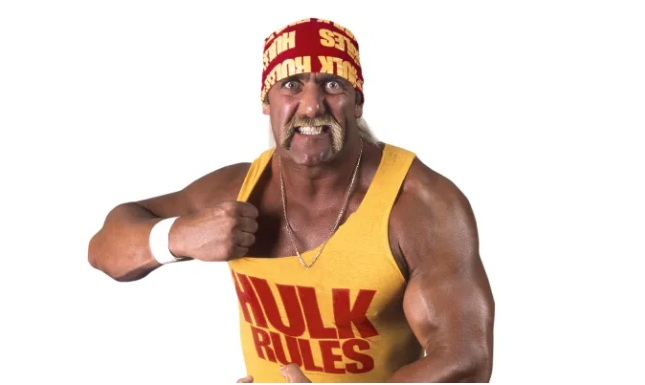
His trademark look—the blond mustache, red and yellow gear, and bandana—remains one of the most enduring in pop history. His catchphrases (“Whatcha gonna do, brother?”) and rituals (ripping his shirt, cupping his ear to the crowd) are etched in the memories of anyone who witnessed his glory days.
Championships and Accolades
Major Championships
| Title | Promotion | Number of Times Won | Notable Reigns |
| WWF/WWE World Heavyweight Championship | WWF/WWE | 6 | 1,474-day reign (longest of modern era) |
| WCW World Heavyweight Championship | WCW | 6 | Most in WCW; led nWo |
| Royal Rumble Winner | WWF/WWE | 2 | First to win back-to-back (1990, 1991) |
| WWE Hall of Fame | WWE | 2 | Solo (2005), nWo (2020) |
Other Honors
- Headlined eight of the first nine WrestleManias.
- Set American wrestling TV viewership record: 33 million watched Hogan vs. André (1988).
- Multiple Pro Wrestling Illustrated awards, including Wrestler of the Year.
Unforgettable Matches & Moments
- WrestleMania I (1985): Tag-teamed with Mr. T to defeat Roddy Piper and Paul Orndorff, launching WrestleMania.
- WrestleMania III (1987): Defeated André the Giant in a match seen by 93,173 at the Pontiac Silverdome, a record crowd.
- Royal Rumble 1990 & 1991: First to win back-to-back rumbles.
- nWo formation (1996): Heel turn at Bash at the Beach changed the trajectory of wrestling.
- WrestleMania X8 (2002): Iconic showdown with The Rock, a generational passing-of-the-torch.
The Hulkamania Philosophy
For decades, Hogan’s message to his “Hulkamaniacs” was simple and uplifting: believe in yourself, stay fit, say your prayers, and eat your vitamins. In an era often focused on antiheroes, Hogan embodied positivity and perseverance—the very traits that endeared him to children and adults internationally.
Controversies and Challenges
No legend’s story is complete without acknowledging darker chapters. Hogan’s legacy includes controversy, notably:
- Steroid Scandal: Hogan’s testimony at the McMahon steroid trial shattered his squeaky-clean image but also exposed the widespread reality of performance-enhancing drugs in wrestling at the time.
- Personal Setbacks: Public feuds, divorces, and a well-documented leaked tape scandal brought scrutiny to Hogan’s personal life and business dealings.
- Industry Politics: Hogan was often criticized for overshadowing other talents and refusing to lose matches, spurring debate about ego and fair play.
These realities, while casting a shadow, make his triumphs and humanity even more resonant.
Wrestling’s Greatest Ambassador
Despite controversies, Hulk Hogan’s role as wrestling’s biggest ambassador cannot be overstated. He was instrumental in elevating WWE to the global stage, pioneering crossover promotions, and inspiring generations of aspiring wrestlers. His work with charities and his accessibility made him a hero to millions.
The Immortal’s Final Years
Even after retirement, Hogan made regular returns for special events, Hall of Fame ceremonies, documentaries, and podcasts. His reflections offered fans wisdom, nostalgia, and timeless one-liners. Hogan remained an icon, symbolizing resilience and transformation.
The Fans’ Hero
Hogan’s truest achievement may be the unbreakable bond with his fans. To the “Hulkamaniacs” he inspired over four decades, Hogan was more than an athlete—he was hope, heroism, and the ultimate champion. His spirit lives on in every cheer, every “brother!” and every new star who steps into the ring with his influence.
Legacy: The Enduring Spirit of Hulkamania
Hulk Hogan’s passing closes a monumental chapter, but his legacy is secure. In each bodyslam, crowd chant, and raised finger, “Hulkamania” lives forever—the rallying cry for anyone who believes in the power of dreams, discipline, and the will to win.
As we salute the man who led wrestling into the mainstream and changed entertainment forever, let the words ring out one last time:
Whatcha gonna do when Hulkamania runs wild on you?
Thank you, Hulk Hogan. Rest in power, Immortal One.