Discover the history, stages, jerseys, and legends of the Tour de France—cycling’s most prestigious event. Learn why it remains the ultimate endurance race in global sport.
Introduction: Why Tour de France is the Ultimate Race
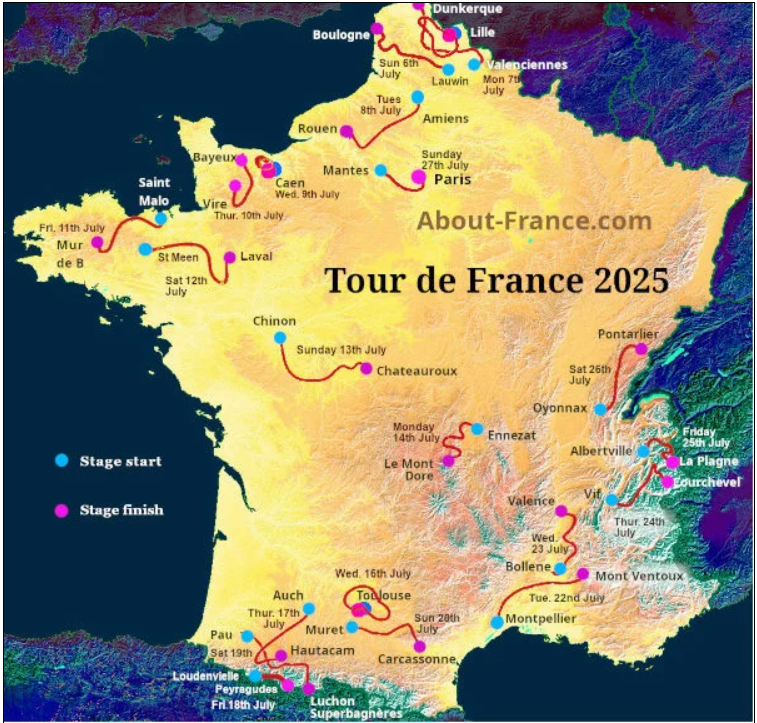
The Tour de France is the pinnacle of professional cycling. More than a race, it is an extraordinary battle of endurance, strength, and strategy. Covering approximately 3,400 kilometers across 21 stages, this three-week epic challenges riders through flat terrains, punishing mountain climbs, and intense time trials. For over a century, the Tour has captured the imagination of millions worldwide.
The Birth of a Legend: A Brief History
The Tour de France was first held in 1903, created by the French newspaper L’Auto to increase circulation. What began as a marketing idea became the world’s most prestigious cycling race. In its early editions, riders faced unimaginable hardships—gravel roads, minimal gear, and night riding. Despite interruptions during World Wars, the race returned stronger each time, becoming a cultural institution.
Race Format: How the Tour Works
The modern Tour de France consists of:
- 21 Stages: Including flat stages for sprinters, hilly and mountainous stages for climbers, and time trials.
- Three Weeks of Racing: Spanning 23 days with only two rest days.
- Team Participation: 22 teams, each with eight riders, competing for individual and team honors.
Prestigious Jerseys
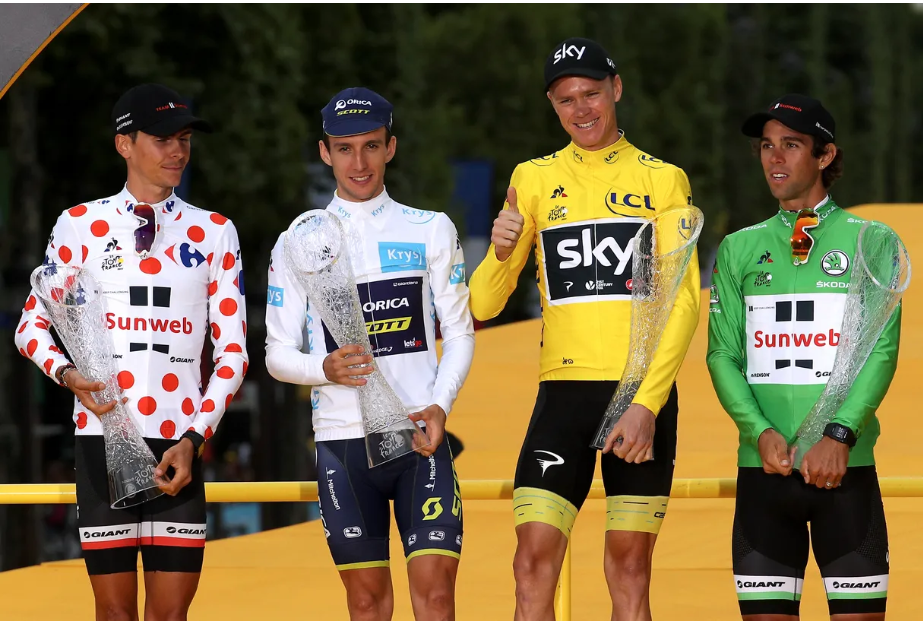
- Yellow Jersey (Maillot Jaune) – Awarded to the overall race leader (General Classification).
- Green Jersey – For the points leader, usually the best sprinter.
- Polka-Dot Jersey – For the best climber, also called King of the Mountains.
- White Jersey – For the best young rider under 26.
The Route: Beauty and Brutality
Each year, the route changes but remains centered in France, occasionally starting in another country. It includes:
- Flat Stages: Ideal for sprinters.
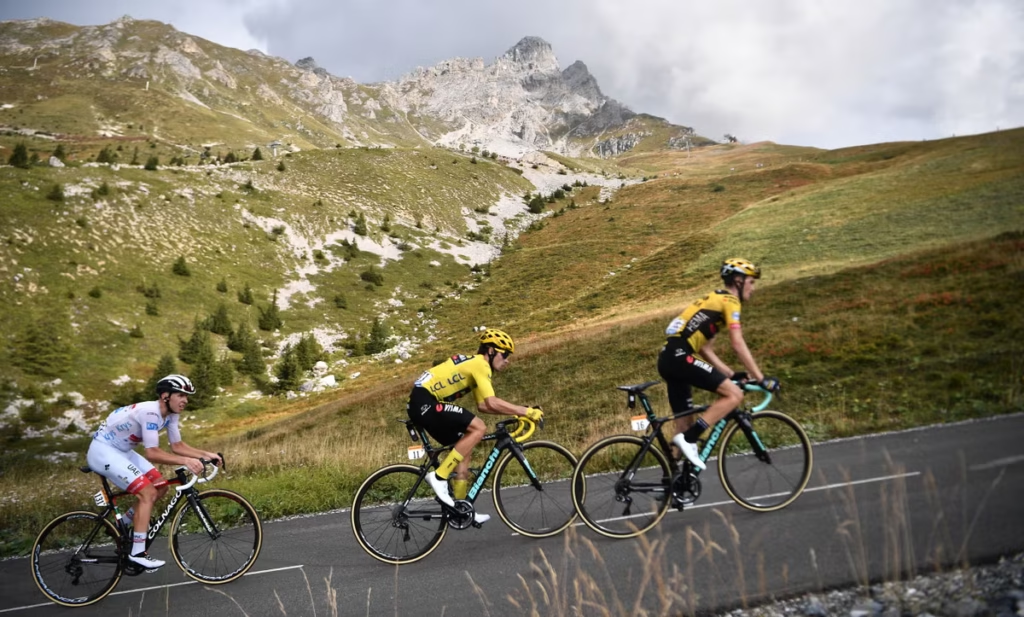
- Mountain Stages: Featuring brutal climbs in the Alps and Pyrenees, such as Mont Ventoux and Alpe d’Huez.
- Time Trials: Testing individual speed and endurance against the clock.
The scenery—lush vineyards, historic villages, and breathtaking mountain passes—adds a unique charm, making the Tour as much a cultural showcase as a sporting event.
Legends of the Tour
Some riders have become synonymous with greatness:
- Eddy Merckx – Nicknamed “The Cannibal,” winner of 5 Tours and holder of numerous stage victories.
- Bernard Hinault – The last Frenchman to win, with 5 victories.
- Miguel Indurain – Dominated the 1990s with five consecutive wins.
- Lance Armstrong – Won 7 Tours before being stripped of titles due to doping scandals.
These names symbolize not just victories but the grit required to conquer the Tour.
The Yellow Jersey: More Than Just a Color
The yellow jersey is one of the most coveted prizes in sports. Introduced in 1919, its color matched L’Auto’s yellow pages. Winning it is a mark of consistency, strategy, and resilience—traits that define the very spirit of the Tour.
Drama, Crashes, and Controversies
The Tour is not without drama:
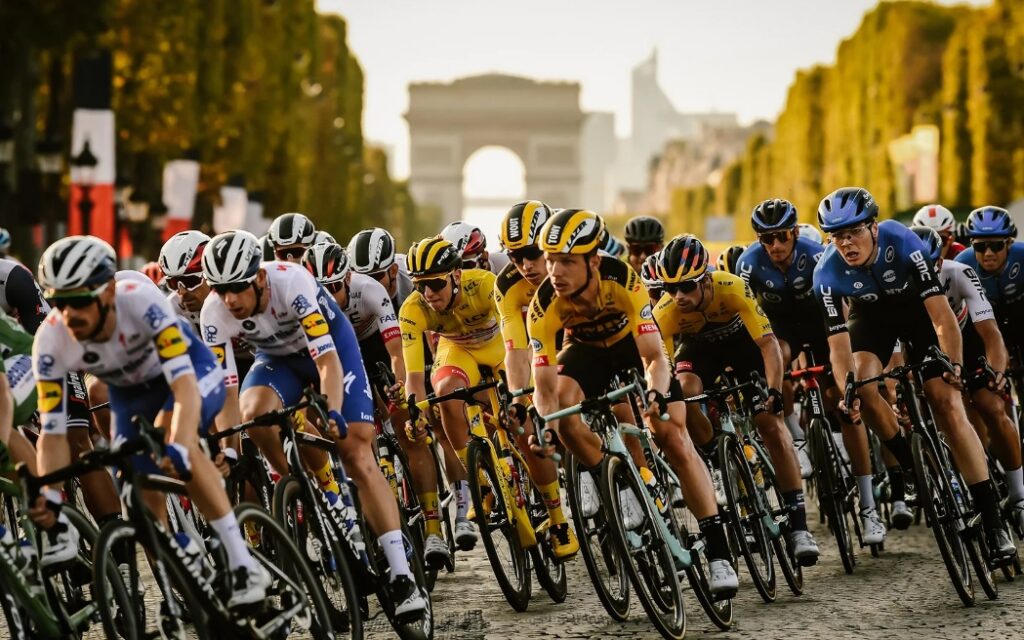
- Crashes – High-speed descents, narrow roads, and unpredictable weather make crashes inevitable.
- Doping Scandals – From early stimulants to the Armstrong era, doping has been a recurring shadow.
- Spectator Incidents – Overzealous fans occasionally cause accidents, adding unpredictability to the race.
Despite these, the Tour has maintained its prestige through stricter regulations and technological advancements.
Modern Innovations in the Tour
Today’s riders benefit from:
- Advanced Bikes – Lightweight carbon fiber frames and aerodynamic designs.
- Data Analytics – Real-time performance tracking for strategy adjustments.
- Nutrition Science – Precision diets for energy optimization.
- Anti-Doping Measures – More rigorous testing for fair play.
Cultural Impact: A Moving Festival
The Tour de France is more than sport—it’s a national celebration of France. Roadsides brim with cheering crowds, colorful caravans, and traditions. For global fans, the Tour offers a visual feast of French heritage—rolling vineyards, majestic castles, and dramatic mountain passes.
Top Challenges Riders Face
- Fatigue – Three weeks of intense racing with minimal rest.
- Mountain Climbs – Gradients exceeding 10% in extreme heat or snow.
- Weather – Sudden shifts from scorching sun to chilling rain.
- Strategy – Balancing energy, teamwork, and timing attacks.
Tour de France in Numbers
- Distance: ~3,400 km
- Stages: 21
- Riders: ~176 from 22 teams
- Viewership: Over 3.5 billion TV audience globally
Why It Remains Iconic
The Tour de France combines:
- Unpredictability – Every stage brings surprises.
- Endurance – Few sports demand such sustained effort.
- Scenery – It’s part race, part postcard from France.
- History – Over 120 years of tradition.
Final Thoughts
The Tour de France is not just a race; it’s the ultimate symbol of human endurance, resilience, and tactical brilliance. For cyclists, it’s the dream of a lifetime. For fans, it’s three weeks of breathtaking drama and beauty.